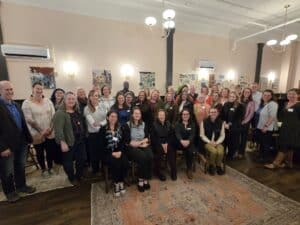
Policies may be written in Montpelier, but families live them in their own communities every day. That’s why, at their October retreat, Building Bright Futures’ State Advisory Council (SAC) members left the meeting room and spent time on the ground in Washington and Lamoille counties.
“The numbers can never capture the full detail. There’s got to be a way to capture the stories.”
—An SAC member during the retreat
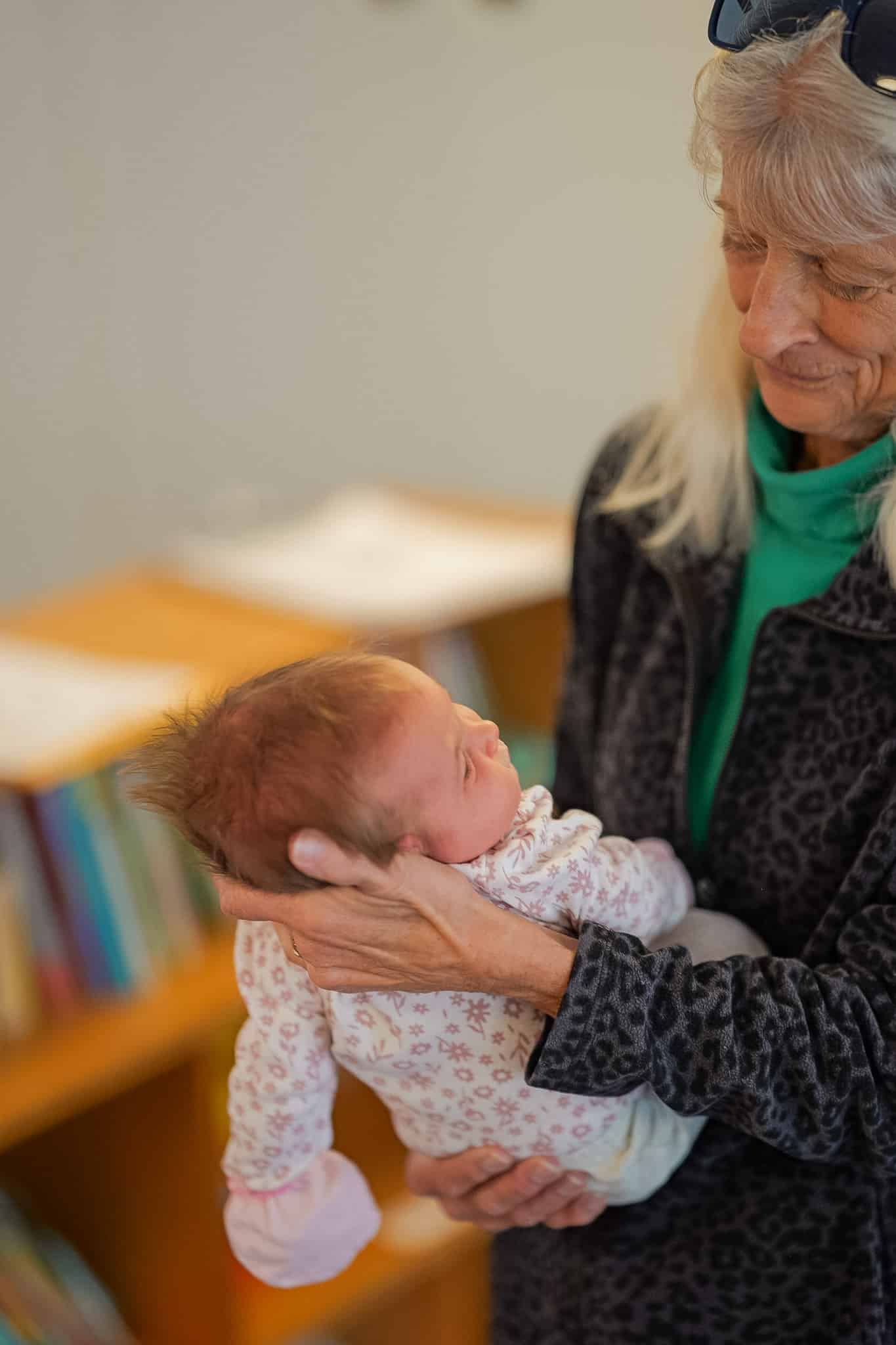
These site visits were the highlight of this year’s SAC retreat for many members. They enjoyed heading out in small groups to visit programs in the community. Council members visited child care programs, a Parent-Child Center, a designated agency, a food shelf, a local library, and a dads’ group. They really valued hearing directly from directors, staff, board members and parents. Then they came back together to ask a harder question: What does this tell us about how Vermont’s early childhood system is working, and whose experiences aren’t reaching decision-makers?
What they learned
When communities step up, the underlying need can become harder to see. One example is when the Lamoille Food Share needed their van repaired, and community donors raised about $40,000 to solve the problem. Members found this both inspiring and concerning: Local solutions meet needs quickly, but they can hide those needs from the people who set budgets and policy. “It’s wonderful when communities come together,” one member said, “and it can’t be the only solution.”
Other impacts stay hidden until someone looks for them. Members heard how losing a single cross-district Pre-K Coordinator left one child care director to work alone with several school districts on services for children. When a position like that is cut, the effects ripple outward. “It’s a domino,” one member observed. “It’s not just one impact.”
Even good policy can fall short if it doesn’t reach families. One member noted “a pretty significant communication gap between policy and community.”
What closes those gaps, again and again, is relationships. At the library, staff described quietly helping a family get home safely in a moment of crisis, something possible only because of trust built over time.
Yet those relationships don’t reach everyone equally. At Vermont Fatherhood, members heard how often services assume mom is the primary parent, and one noted how female-centric a pediatrician’s office can feel to a dad.
What this means
Across every visit, one theme stood out: the people closest to families often don’t believe they can change how the system works, so their experiences never reach decision-makers. That is the gap Building Bright Futures exists to close. As the SAC reflected on its role, members named three commitments. First, to bring people to the table and collect the stories. Second, to elevate these experiences as they relate to policies that impact children and families. Third, to close the loop by reporting back on what changed, what didn’t, and why.
If you work with young children and families, your experience is part of this picture. Connect with your BBF Regional Council to share what you’re seeing in your community.
Thank you to our partnering organizations for hosting SAC members in October!
- Clubhouse Kids
- Kellogg-Hubbard Library
- Lamoille Community Food Share
- The Lamoille Family Center
- Montpelier Children’s House
- Vermont Fatherhood
- Washington County Mental Health