
My journey into the world of child and family policy began in a courtroom—not as a lawyer, but as a witness to the ways policy decisions directly impact real lives. I had the opportunity to work alongside both civil and family court judges, and what stood out to me most was that so many of the issues bringing families into courtrooms weren’t just personal, they were structural. The root cause of families’ challenges often lay in policies: housing instability, lack of child care, poor access to mental health services. I knew I needed to better understand how these policies are made, and more importantly, how they could be improved.
That experience set me on a path of learning how public programs and policies shape family outcomes and what it takes to create systems that truly support children and the adults who care for them. This led me to spend this summer at Building Bright Futures (BBF) as a Policy and Research Intern.
From Observation to Action: Skills and Lessons Learned
Through hands-on work with researchers, advocates, and policy professionals, I’ve had the opportunity to speak directly with those collecting and analyzing data from families. These conversations were incredibly valuable. Data isn’t just numbers on a spreadsheet, it’s a reflection of lived experience. Understanding how families experience systems of child welfare, public health, and education helps reveal what’s working and what urgently needs to change.
One of the most valuable skills I gained during this time was learning how to translate complex research into messages that resonate with policymakers using clear, concise language that centers both evidence and empathy. Another valuable skill that I have been able to learn is data analysis. In today’s political climate, understanding both qualitative and quantitative data is a critical skill. It’s not just about finding the numbers; it’s about telling the story behind them, putting information into plain language for others to understand. Whether it’s speaking with families, researchers, or legislators, I learned how to communicate clearly and effectively, bridging the gap between data and real-world impact.
Washington, D.C: Shaping Perspective
This July, I had the opportunity to travel to Washington D.C. alongside BBF’s Executive Director, Morgan Crossman, a trip that expanded my understanding of how policy is made and who shapes it. I had the chance to meet with PhD-level researchers, policy advocates, and government staffers working across child and family issues. Through my four meetings with Hill staffers, I came to appreciate the nuances of the difference between lobbying, advocacy, and delivering information about research. I learned the importance of being a nonpartisan, honest broker of data, someone who can present findings without political spin but with enough context to drive meaningful action. During this time I also learned being able to effectively provide strategic storytelling. Perhaps one of the most underrated skills in policy work is knowing how to tell your story. When done well, storytelling can humanize data, influence lawmakers, and help shift priorities toward the needs of real families. My internship opportunity wouldn’t exist without funding from the Preschool Development Grant, which allows states like Vermont to increase their capacity to invest in early childhood systems and monitoring efforts. As someone who benefited from an internship that was federally funded, I shared in the meetings the impact that essential programs have had on me personally and many others. I also reiterated why funding is critical now more than ever in being able to effectively do the work that we are doing.
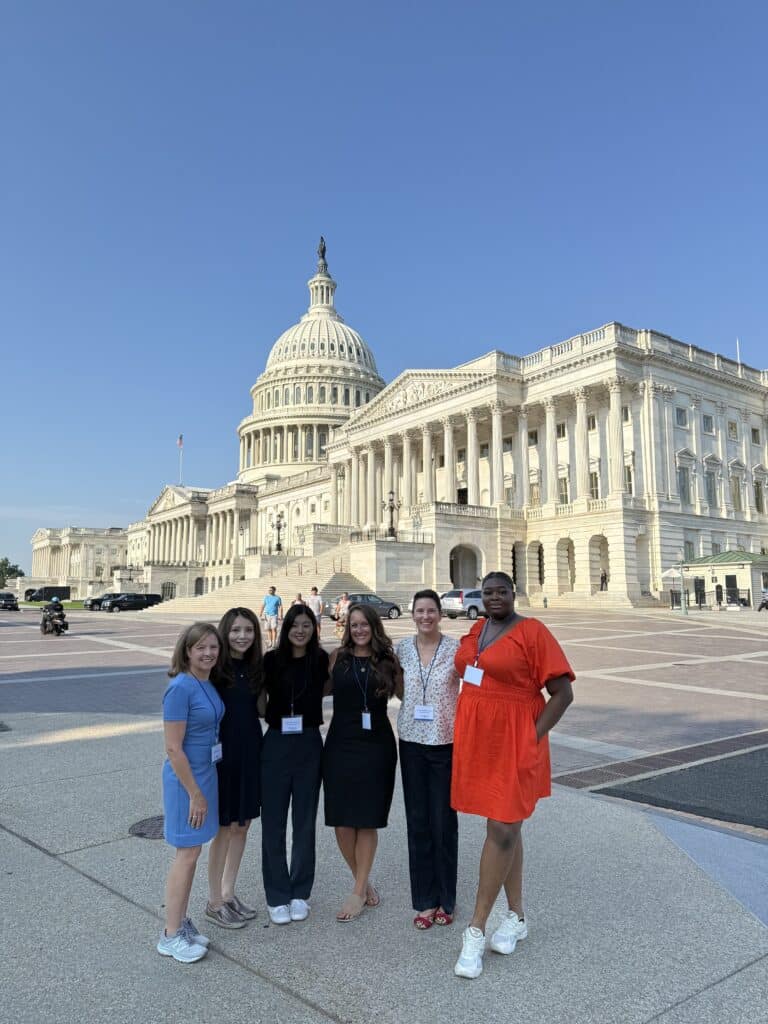
Titilayo Aluko (on right) with a group in front of the U.S. Capitol, including BBF Executive Director Morgan Crossman (fourth from left). Titilayo Aluko and Morgan Crossman are also pictured at the top of this page.
Why Funding Matters
One key takeaway from my experience so far is that this work requires sustained, strategic investment.
Funding supports not just research, but the people behind it: data analysts, program evaluators, family engagement specialists, and policy advocates. It allows us to monitor trends affecting kids and families, assess whether programs are working, and adjust in real time. Without this funding, we risk losing the insights needed to build effective, equitable systems. It’s not just about programs, it’s about the infrastructure behind them—people, partnerships, and policy analysis. So many other staff members and I would not be able to do the work that we do day in and day out without the funding that provides the stability to be a part of this workforce.That is why it is crucial to create more opportunities to learn about policymaking and research on children and families to better serve those directly impacted.
Policy Is Personal
The systems we work to improve are only as strong as the people who fight for them and the people who live within them. As someone who started by observing courtrooms and is now sitting across from lawmakers, I’ve come to understand that policy isn’t just about numbers or programs, it’s about people.
Families shouldn’t need to fall through the cracks before they’re noticed. By using data, elevating voices, and centering equity, we can build policies that prevent harm, promote well-being, and ensure every child has a bright future.
This work is urgent, and this work is possible.