
The Preschool Development Grant (PDG) is investing $23 million in Vermont’s early childhood system from 2023 through 2025. This federal grant is improving the lives of children and families in many ways, some of which are immediately visible—such as increasing child care spots, building family leadership, and better supporting the early childhood workforce.
At the same time, other projects made possible by this grant are building important capacity and infrastructure behind the scenes. Data integration is the focus of one grant-funded project being led by Building Bright Futures (BBF).
What is data integration?
Vermont has a lot of important data about the well-being of young children. But it can be hard to access, analyze, and report this data. Some of the barriers include: different time frames, different ways of asking the same question, different definitions of the key terms, different ways of protecting privacy, different ways of storing and sharing data, overlapping or duplicated data, and outdated data management system
Vermont’s early childhood working definition of data integration and alignment is to reduce the obstacles and disconnects described above. The vision of this project is to increase access to and understanding of high-quality, up-to-date data. The underlying goal is to improve equitable access to and quality of services, resources, and supports for young children, their families, and the early childhood system by using data to inform policy and program decisions. Three priorities have guided this work:
- Turning data into action: Translate raw data into insights that inform decisions, guide investments, and shape policies that directly improve services for children and families.
- Increasing transparency and accountability: Make high-quality data publicly available in accessible formats, so families, providers, and policymakers can see how programs are working.
- Reducing silos: Align definitions, methods, and systems across agencies so information can be shared, compared, and used more effectively.
The first-hand data being collected by health care professionals, educators, and other early childhood professionals requires a lot of their time and effort, which makes it even more important to honor and use this data effectively.
What progress has been made so far?
Four Vermont state entities—the Agency of Education, Department of Health, Child Development Division, and Office of Racial Equity: Division of Racial Justice Statistics—were each able to hire a new staff member with PDG funding. These four new analysts are doing crucial work to improve the transparency and accessibility of data about young children and families in Vermont. Building Bright Futures was also able to add new staff capacity with PDG support.
These staff positions are funded by the grant through the end of 2025. The work made possible by these team members has had an outsized impact in making high-quality data publicly available and accessible. While our commitment to this work remains, our teams are working to identify sustainable funding for these positions given the uncertainty of federal funding.
Below are five highlights of achievements toward data integration that this increased staff capacity has made possible:
1. Launching Vermont’s Early Childhood Data Portal
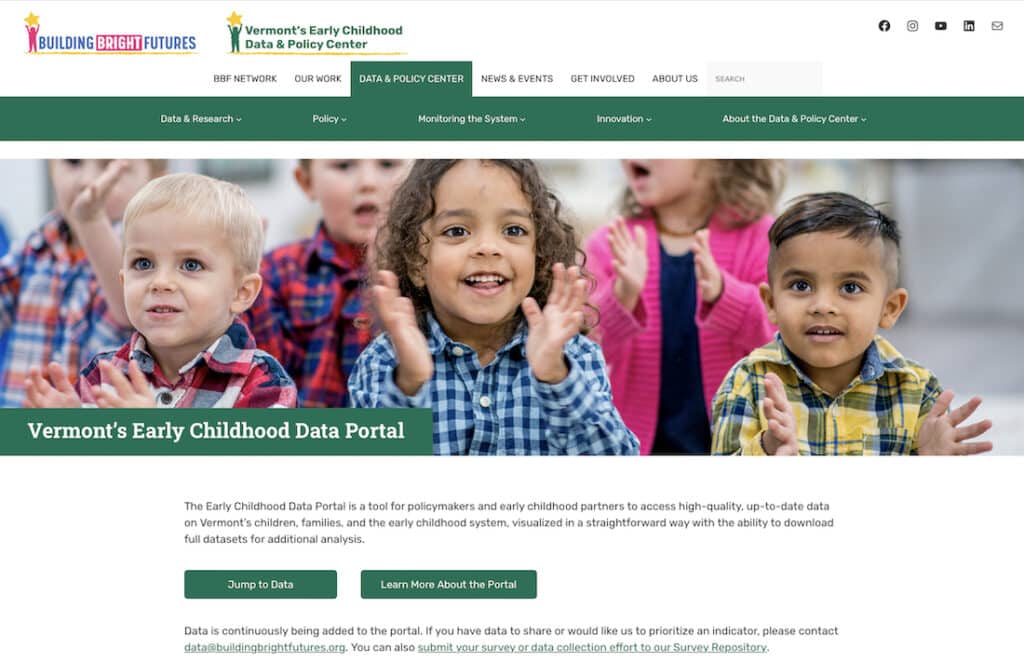
In February 2024, BBF launched Vermont’s Early Childhood Data Portal, and BBF continues to update it on a regular basis. This portal is a tool for policymakers and early childhood partners to access high-quality, up-to-date data on Vermont’s children, families, and the early childhood system. The data is visualized in a straightforward way with the ability to download full datasets for additional analysis.
2. Making Child Care Data Publicly Available
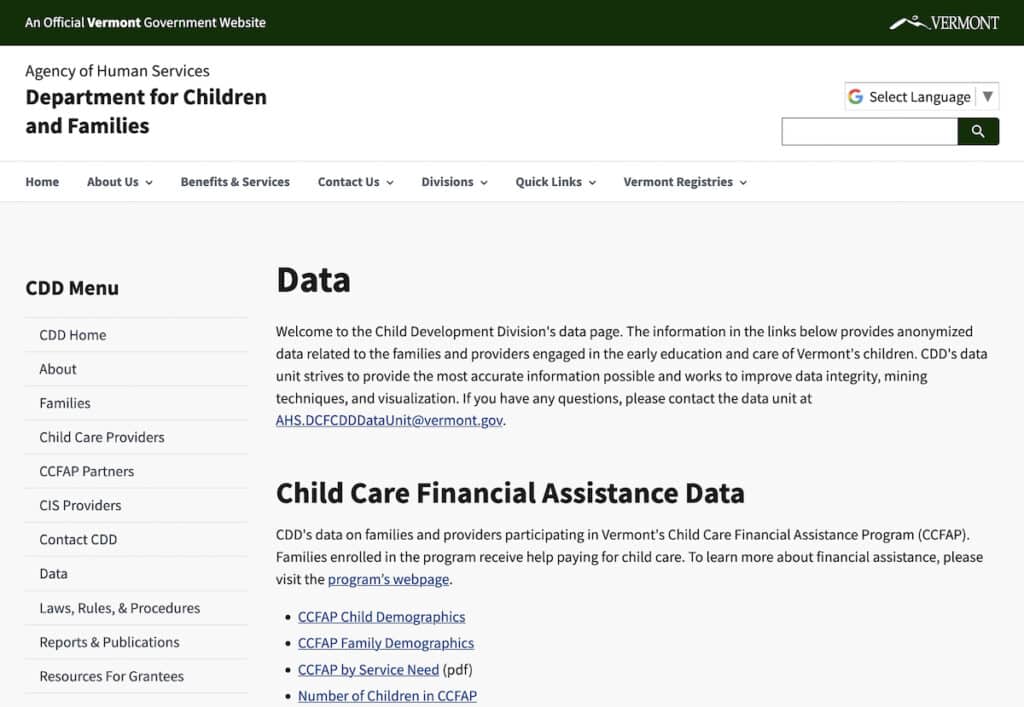
With increased staff capacity, the Child Development Division (CDD) was able to create and launch a new webpage in 2024 where the public can access data about the Child Care Financial Assistance Program and child care providers. This increases transparency and accountability. CDD is also incorporating PowerBI for more complex visuals and analysis. The PDG-funded staff member at CDD works primarily on Act 76, the historic child care law that Vermont passed in 2023.
3. Sharing Results of Pre-K Assessments
Teaching Strategies GOLD is a pre-K assessment that early childhood educators administer twice a year, as required by Vermont law. Educators have been completing these assessments for all pre-K students and sending results to the Agency of Education since 2018, but opportunities to access or analyze this data on a statewide level were very limited.
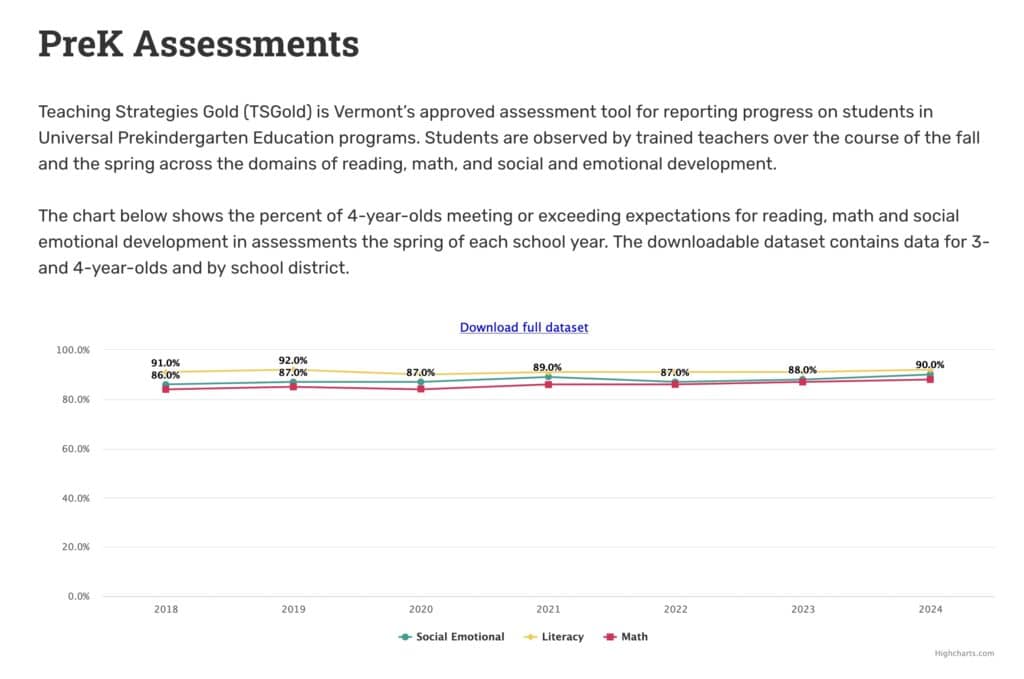
Now, thanks to the work of the new Agency of Education staff member, early childhood professionals can access the data from these assessments. This allows partners to identify trends over time in Vermont’s early childhood education, monitor those trends, and better target investments where they will do the most good.
4. Combining Two Databases of Developmental Screenings
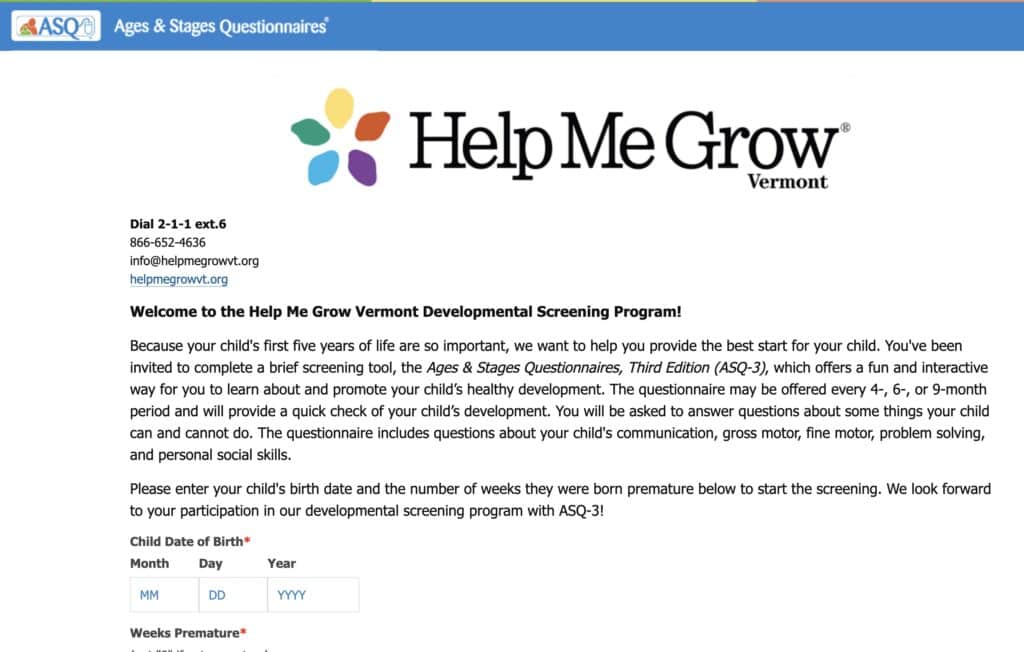
Developmental screenings, such as the Ages & Stages Questionnaire (ASQ), are recommended on a regular basis for young children. In Vermont, the results of these screenings are centralized in a database called the Universal Developmental Screening Registry, which professionals such as a child’s pediatrician or teacher can securely access and refer to over time. In 2021, the Health Department launched an online Ages & Stages Questionnaire that professionals or parents/caregivers can complete.
Unfortunately, this helpful tool led to a data disconnect because the results from this online version of the screening weren’t going into the same registry as screenings completed in person. To fix this disconnect, the PDG-funded analyst at the Vermont Department of Health set up a process for migrating the online screening records into the existing registry. She has migrated thousands of records and developed a process for ongoing migration. Centralizing these records allows children to get better medical care and the supports they need.
5. Analyzing Data on Hazing, Harassment, Bullying, and Exclusionary Discipline
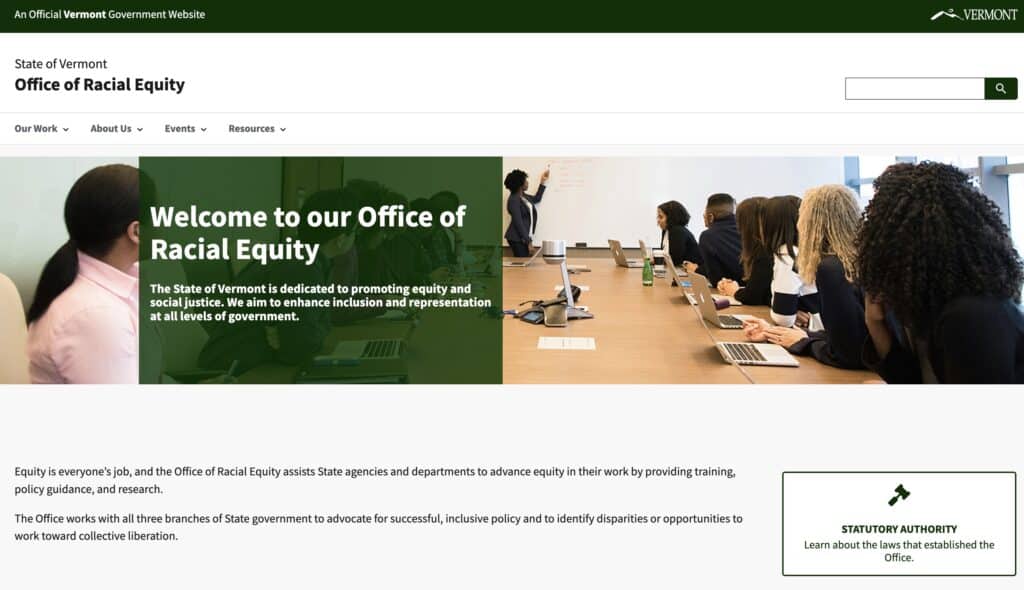
The PDG-funded analyst at the Office of Racial Equity/Division of Racial Justice Statistics (under the Agency of Administration) did a detailed analysis of the Hazing, Harassment, and Bullying and Exclusionary Discipline datasets. Their efforts focused on identifying underlying patterns and potential disparities that may otherwise go unnoticed due to over-suppression in publicly available data.
These are just a few examples of recent progress toward integrating early childhood data in Vermont. The Preschool Development Grant is also fostering more communication and collaboration among early childhood partners, including various state entities and BBF. This cross-pollination is happening more than ever at every level—leadership, policy, and data analysts—and will lead to a stronger system for young children and families across Vermont.