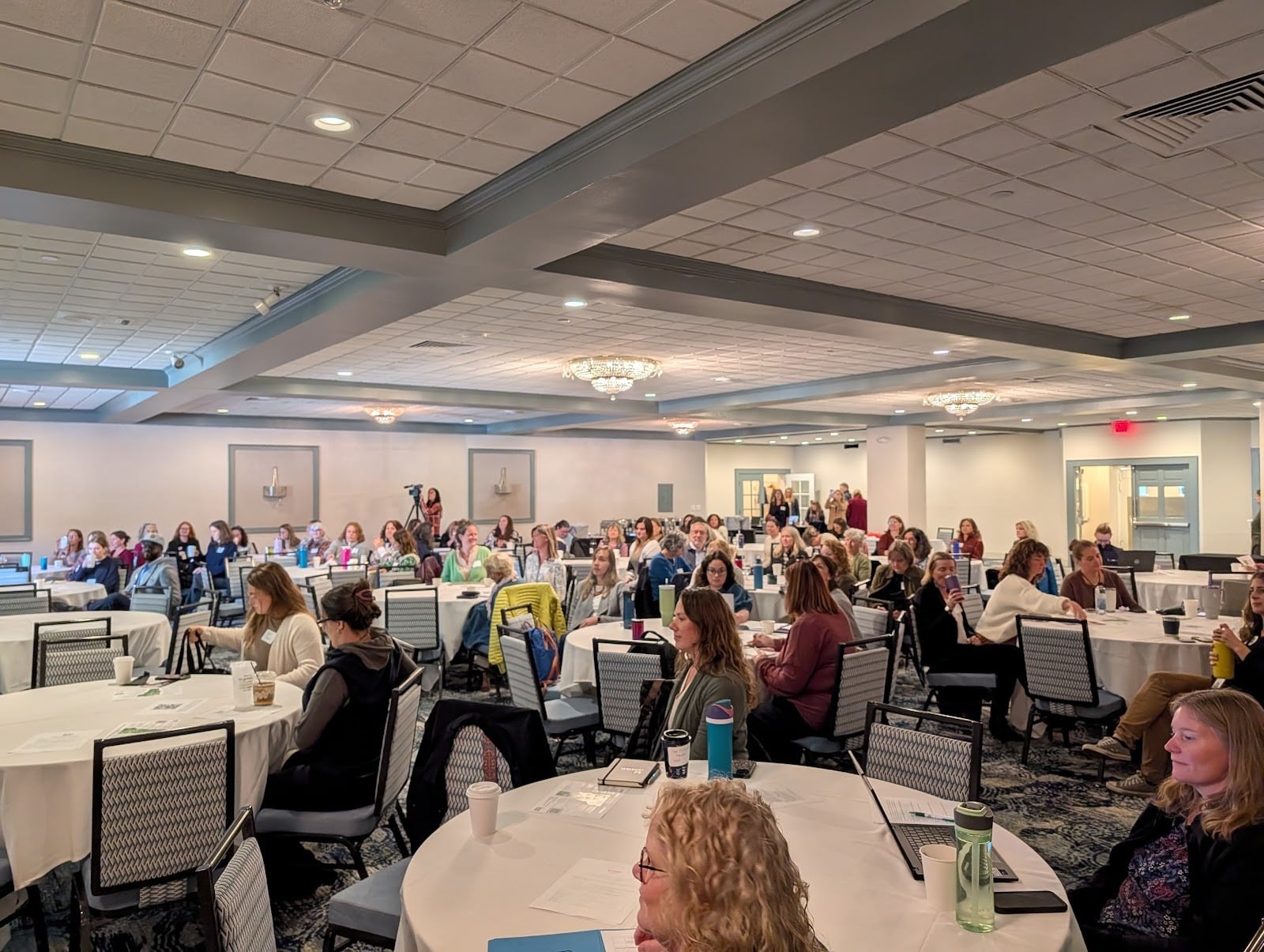
Annually, Building Bright Futures convenes Early Childhood Regional Council members from across Vermont for an in-person event dedicated to an important topic. This year’s theme was “Understanding the adverse effects of substance misuse on children on families and planting the seed of hope for a healthier community.”
About 100 Regional Council members attended, representing early childhood educators, school districts, health care providers (including pediatricians), community partners, and nonprofits like United Way and Steps to End Domestic Violence, which provide a critical safety net within Vermont’s early childhood system.
Three Vermont professionals who are making a difference in the lives of people managing substance use joined us for a panel discussion. The panel was moderated by Kerri Duquette-Hoffman, Agency of Human Services Field Director for Burlington/Middlebury, and included perspectives from leaders at a recovery center, a local hospital system, and Vermont’s Department of Health.
Rosemary Rosa is the Executive Director of Turning Point Center of Central Vermont and is in recovery herself. She talked about the importance of peer coaching and support for families and caregivers who are in recovery or are hoping to use less or in a safer way. Peer parenting support and connection breaks down shame and stigma. The Center partners with the local Parent-Child Center and home visiting program in order to reduce barriers in child care access and transportation. Turning Point is also strengthening its relationships with local Department for Children and Families office staff. Rosemary shared that their work yields better outcomes because it is led by people who are in recovery and who are used to speaking about substance use on a daily basis. This helps to break down stigma and build trust.
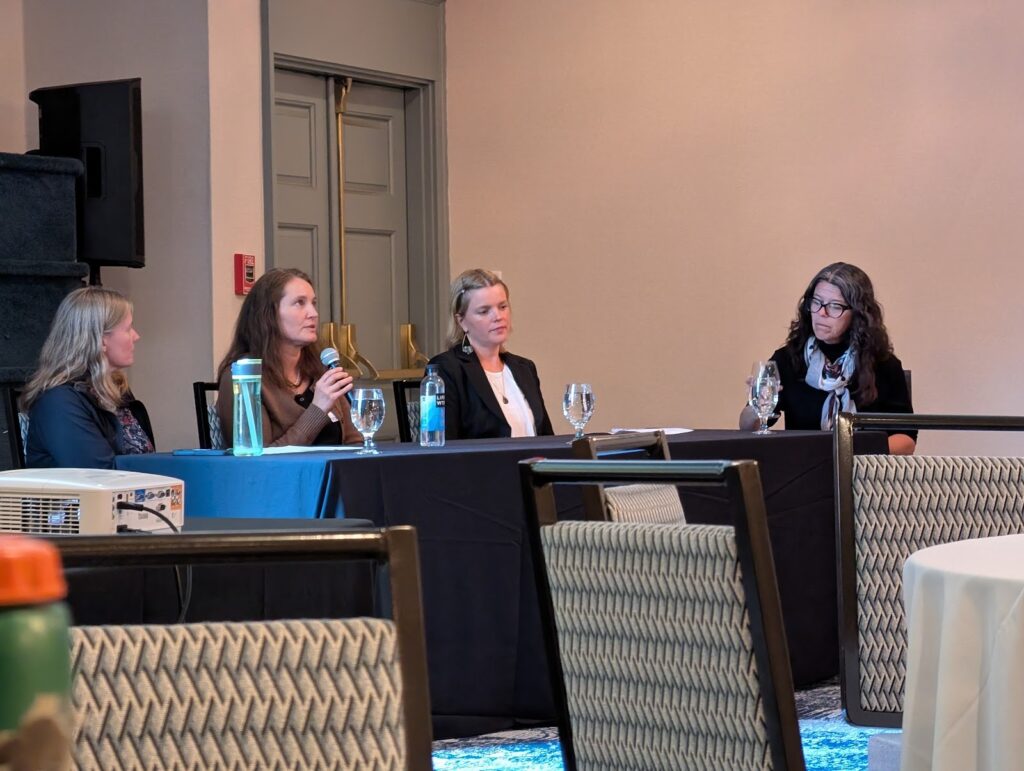
Panelists from left to right: Becky Parton, Katy Leffel, Rosemary Rosa, and moderator Kerri Duquette-Hoffman
Becky Parton and Katy Leffel shared their perspectives as health care providers serving families with substance use disorder. Becky Parton is the Project Director at Dartmouth’s Trauma Intervention Research Center, which serves New Hampshire and Vermont families. Parton shared that they have been incorporating substance use disorder screenings on social determinants of health and developmental questions into well-child visits for ages 0–5, making these screenings part of their standard practice, and making resources easily accessible and non-judgmental. The center is able to refer WIC-eligible families to New Hampshire to get them set up with services, and similar practices are being worked on in Vermont as well.
Katy Leffel, Public Health Nurse at the Vermont Department of Health, is in the process of updating the Department’s Plan of Safe Care, now called the Family Care Plan, to be a meaningful tool to support pregnant people using substances. Details in the improved tool include coordination and privacy considerations as well as trauma-responsive care and supportive screening from the lens of the newborn. The plan goes beyond what is federally required reporting to become a path to empowerment and support for expectant families. The panel demonstrated ways our state is thinking creatively to reduce barriers for families and using recovery-friendly language that builds trust.
The summit’s keynote speaker, esteemed author, educator, and mother Jessica Lahey, shared her personal and professional experiences with substance misuse and addiction. She shared resources and evidence-based science about child and adolescent development and risk factors for substance misuse, such as genetics, epigenetics, and a child’s life experiences. Because young people’s brain development is different from adults, Lahey said, substance use prevention should be approached differently. Allies in the early childhood system who work with children of all ages can help spot risk factors, talk about issues, incorporate prevention, and support early intervention when available. Here are three factors Jessica shared that lead to a lower risk of substance misuse:
- Giving kids autonomy gives them intrinsic motivation for positive experiences.
- Building competence, not just confidence, in new experiences is key. Competence is confidence paired with evidence of achievement.
- Finally, connection with young people by seeing, hearing, and loving them for exactly who they are can be a powerful form of prevention and early intervention for risky behaviors at older ages.
Jessica brought a library of books and information about experts for furthering our knowledge on many topics. Her website features a library of videos on a wide range of topics related to substance use disorder.
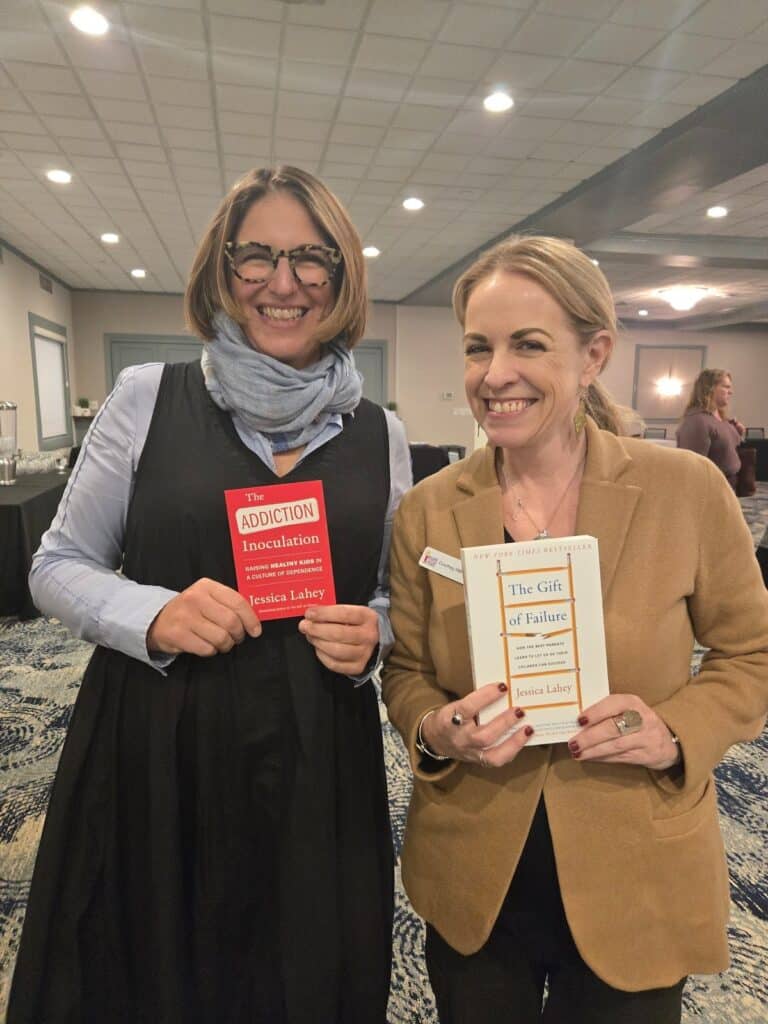
Keynote speaker Jessica Lahey, left, and Courtney Hillhouse, BBF’s Regional Manager for Southeast Vermont, Northern Windsor/Orange, and Springfield Area
There are many ways to prevent or reduce the harms caused by substance misuse, and we are fortunate to have many resources to support families impacted by it. Of course, there is still more to be done. Suggestions for systemic change included housing-first policies with more recovery-friendly shelter that is also family-friendly, more training in mental health first aid for educators, investments in projects like recovery high schools, and shifting child welfare from mandated reporting to supporting the whole family with investments in home visiting and Medicaid reimbursement for doulas and peer recovery coaches.
Strategies for tackling substance use, mental health, and safe communities can be found in the newly updated 2030 Early Childhood Strategic Plan under Goal 2.
Top image: Members from Regional Councils across the state gather at round tables to listen to BBF Executive Director Dr. Morgan Crossman start the day at Capitol Plaza in Montpelier, Vermont