“The system should be built to help us, not force us into battles for basic necessities.”
— A participant in BBF’s recent Community Conversations
This year marks the conclusion of the 2020–2025 version of Vermont’s Early Childhood Action Plan (VECAP), the collective vision to improve the lives of our state’s children and families. This October, Vermont’s Early Childhood State Advisory Council (SAC) will endorse a new early childhood strategic plan that will guide Vermont from 2026 through 2030.
In developing the new plan, Building Bright Futures (BBF) is prioritizing lived expertise and families’ voices. We are drawing on the community connections of our 500-person statewide BBF Network to allow us to hear directly from the people who are most impacted by the early childhood system: families, community members, and early childhood professionals.
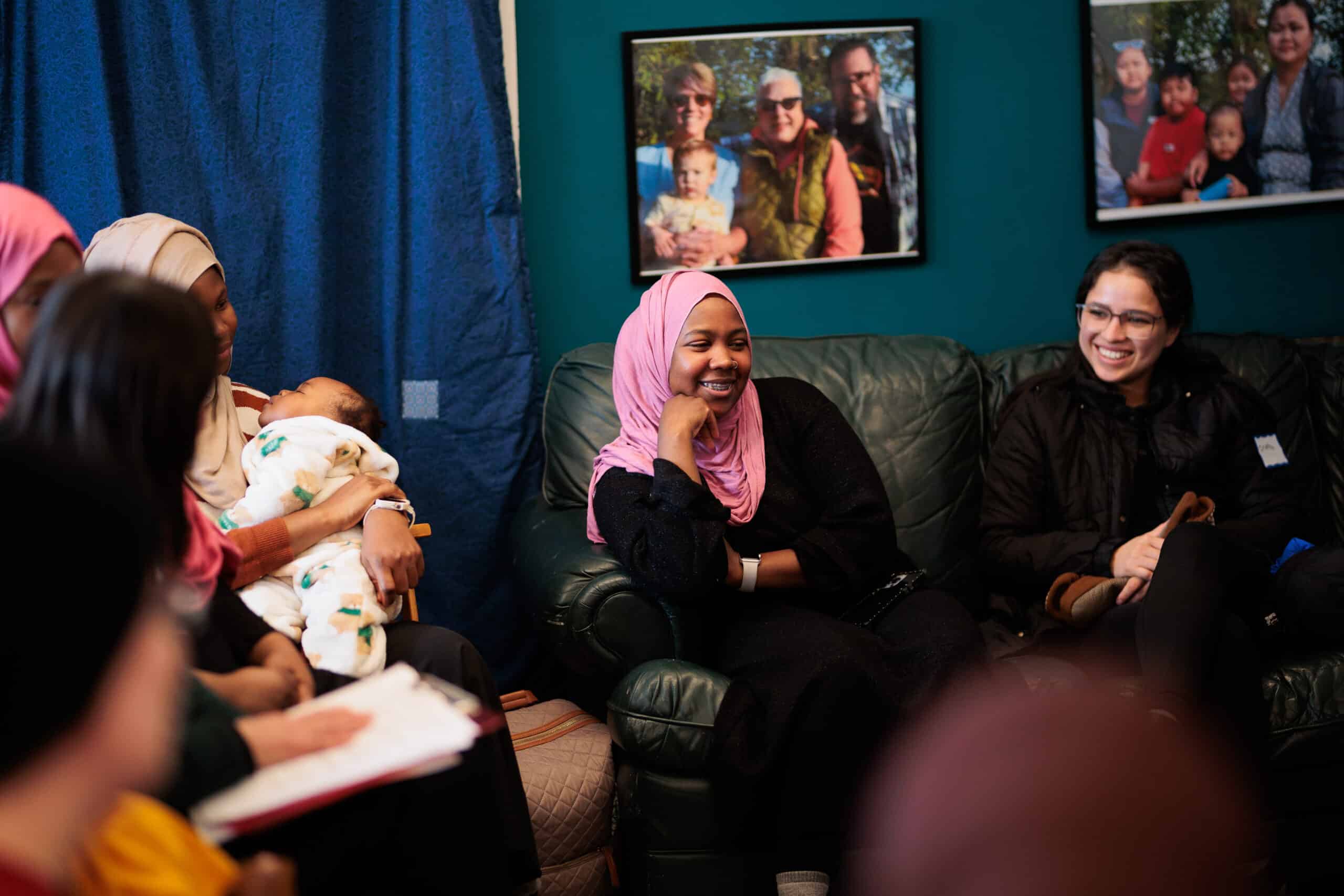
In February and March, Building Bright Futures held a series of Community Conversations to gather input as we develop the 2026–2030 strategic plan. The qualitative data we gathered—stories, experiences, concerns, and insights—will be paired with our years of data on the early childhood system, including monitoring the 2020–2025 VECAP.
These Community Conversations strengthened the equity lens through which we will approach the new strategic plan, filling in gaps and disparities in our data. The input we gathered will play a key role in informing the new priorities and strategies that the State Advisory Council will endorse in October.
Join us at the next State Advisory Council (SAC) meeting, on Tuesday, May 27, from 1 to 3 p.m., where we will take the next steps toward the new strategic plan.
By the Numbers
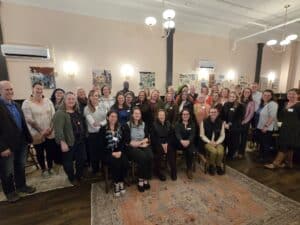
Over the past three months, BBF talked to 195 people about their vision for Vermont’s early childhood strategic plan. Reese Kelly from The Creative Discourse Group facilitated most of the conversations, and BBF Network Manager Kate Bailey took the lead on organization and logistics.
We held 10 Community Conversations with 92 family members and youth.
We also convened 3 Community Conversations with 103 early childhood professionals from the BBF Network.
With our community partners, we hosted conversations in Waterbury, Sheldon, Lyndon, Newport, Burlington, and Montpelier, with many other neighboring towns represented. We also held events online.
Of the people we talked to, 90% identified as women and 90% identified as parents. We talked to family caregivers (including parents and grandparents), community members, early childhood professionals, and young people.
Our conversations included low-wealth families, rural families, people with a disability in their family, LGBTQ+ people, BIPOC families, people with a range of immigration statuses, and families experiencing homelessness.
Community Engagement Takes Time and Resources
BBF is committed to elevating the voices of families and communities—which means investing time and resources. To be effective, the 2026–2030 early childhood strategic plan must be informed by a broad range of perspectives. In hosting Community Conversations, BBF’s goal was not only to gather valuable input, but to build our capacity to connect with and hear from families across the state.
Our guiding principle was reciprocity. If we are asking families and early childhood professionals to provide us with information, it is fair and equitable for us to provide something in return. Each caregiver in our Community Conversations received a $50 gift card. At some events, we provided other benefits, such as a meal, child care, free family portraits with a professional photographer, and, for a group of middle schoolers who met with us, $25 gift cards and tickets to Jay Peak’s water park.
Turnout was strong. Participants told us that they felt seen and heard. In the future, when planning events like these, we will look for ways to deepen connections, such as allowing more time for conversations and finding ways to connect with participants more than once.
Key Themes
We asked participants to write letters about what they think are the most important issues facing Vermont’s early childhood system. Some clear themes emerged.
Families and caregivers highlighted the following areas of need:
- Economic stability & basic needs, including housing affordability and stability, food security, and employment opportunities
- Access to services & system navigation, including challenges in accessing child care, pre-K, child care subsidies, health care, mental health care, and special education services
- Mental health & trauma-responsive systems, including access to mental health supports; trauma-responsive legal, domestic violence, and custody systems; and substance use supports
- Inclusion, equity, & safety, including addressing racism, the need for LGBTQ+ supports, and the need for supports for children with disabilities and chronic illness
- Advocacy & voice, including the need for families to feel heard in decision-making, be able to advocate for children with disabilities or who are neurodivergent, and build stronger community and peer support networks
- Alternative education & school system challenges, including barriers to equity for homeschooling families
- Isolation & connectivity, including challenges finding the right supports and the emotional toll of navigating services alone
Immigration came up during five out of 10 Community Conversations with families, with a number of non-citizen participants sharing their experiences. Some were Canadians living in Vermont who talked about our communities’ shared values. One early childhood provider noted that she wants to become a licensed teacher but her current immigration status makes the process prohibitive.
Letters from early childhood professionals centered on similar themes, including challenges with cost of living, basic needs, transportation, and the need for stronger social and community support networks.
Early childhood professionals also spoke about:
- Workforce challenges, including recruitment, retention, and professional development
- Access to basic needs (food, transportation) and affordability of programs
- A lack of data and evaluation to demonstrate program effectiveness
- The need to understand family perspectives, including the needs of particular populations such as non-citizens
- Funding and sustainability for current and future programs. Specific programs like CIS (Children’s Integrated Services) and Parent Child Centers (PCC) were frequently mentioned, both positively and with concerns about funding.
Our Hosts
A huge thank-you to our generous hosts! Without their participation, we would not have been able to reach such a broad swath of Vermont families with such rich and varied perspectives. The on-the-ground perspectives of the 500-person BBF Network make our work possible and vital, keeping our data, policy, and advisement work grounded in the needs of Vermont’s families and communities.
Our hosts were:
- The Sheldon Interfaith Food Shelf, where the food shelf’s director, his wife, and community members served a dinner of chicken noodle soup and grilled cheese. We all ate together, and then volunteers watched the children while their parents participated in the Community Conversation. People picking up food supplies at the Food Shelf don’t usually talk to each other or stay, so this was a valuable chance to share a meal and connect.
- The New American Women’s group in Burlington, with support from AALV. The group is a coalition of former refugees and immigrants living in Vermont. They have been coming together regularly to build connections, reduce isolation, and provide opportunities for peer-to-peer support while supporting their children and families to succeed.
- The Janet S. Munt Family Room in Burlington, a parent-child center for Chittenden County families. We met with a multilingual group of caregivers and offered them free family portraits with a professional photographer as compensation for their time.
- The Family Resource Center at Lyndon Institute, one of the Parent Child Centers offered by Northeast Kingdom Community Action (NEKCA), along with co-host St. Johnsbury Community HUB, which provided help with child care and communications.
- Good Beginnings of Central Vermont in Montpelier. We attended one of their weekly Baby/Caregiver Meetups, which is typically attended by about 10 caregivers and their children per week. Our Community Conversation session was attended by 23 adults and more than 23 children, bringing new families into the meetups.
- The state-run Waterbury Family Shelter for the Unhoused, located in a former National Guard armory. We brought dinner and children’s activities to the shelter in addition to Spanish interpretation and compensation. Participants shared about their struggles to find housing before the shelter planned to close within three weeks of the meeting.
- The North Country Supervisory Union, a geographically large supervisory union that oversees small, rural schools in far northern Vermont. We attended the SU’s leadership and advocacy retreat for sixth graders, facilitating a Community Conversation as part of the program. We gave each participating student a $25 gift card and a ticket to Jay Peak Resort’s water park.
- Home child care providers who are connected to the Franklin & Grand Isle Early Childhood Regional Council. We joined a group of home child care providers at one of their regular dinner meetings at Irons & Ale, a restaurant in Swanton.
- BBF’s Families & Communities Committee, which met online. Parents, primary caregivers, and guardians who attend Families & Communities Committee meetings are eligible to be paid for their time. Child care stipends may also be available.
We had also planned a Community Conversation with incarcerated fathers, preparing by going through training and background checks, but the event had to be canceled at the last minute because the facility was on lockdown due to being short-staffed.
Thank you to The Creative Discourse Group, our partner in this work. They recently released two reports summarizing these Community Conversations, a one-page summary for participants and a 15-page report, “We Listened to Families and This Is What We Heard,” which will serve as a resource for the BBF Network.
What’s Next?
Join us at the next State Advisory Council (SAC) meeting, on Tuesday, May 27, from 1 to 3 p.m., where we will take the next steps toward Vermont’s 2026–2030 early childhood strategic plan.
We will:
- Rededicate our commitment to the vision and priorities set forth in Vermont’s Early Childhood Action Plan 2020–2025 (5-year strategic plan)
- Celebrate what we learned from the Network engagement process conducted over the past four months to inform strategic plan priorities
- Gather feedback on strategies in the first draft of the strategic plan update
- Preview the timeline and process for writing and gathering feedback on the drafts throughout the summer for endorsement by October 2025
- Build alignment and collaboration across the BBF Network (State Advisory Council, VECAP Committees, and Regional Councils)